
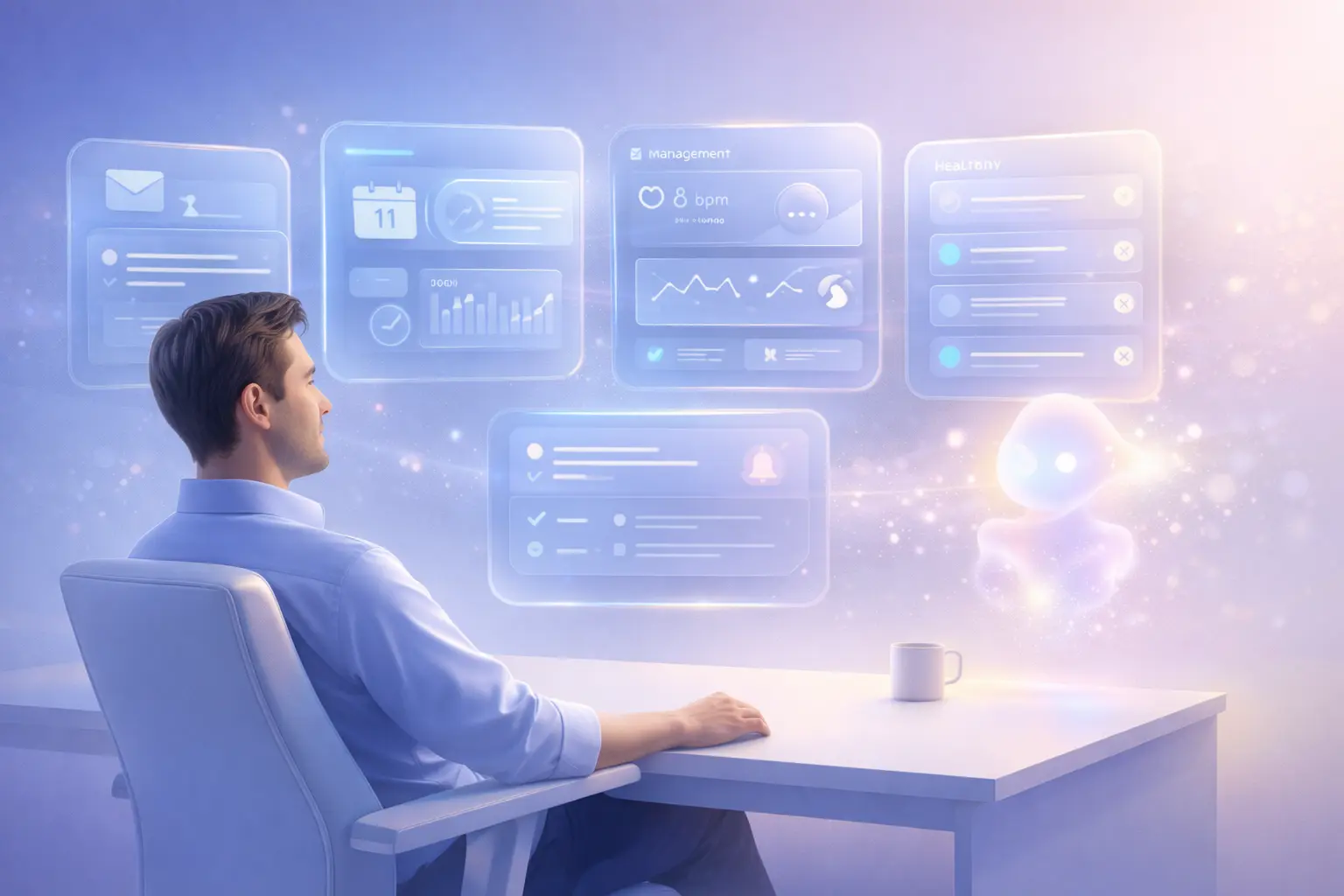
Why this topic really matters
Let’s be honest.
Most of us are not busy because we have too much work.
We are busy because we manage too many apps. AI Personal Assistants in 2026
- Email for communication
- Calendar for schedule
- Notes app for ideas
- Health app for steps
- Banking app for money
- To-do app for tasks
Har cheez ke liye alag app.
Aur sabko manually manage karna padta hai.
2026 me problem ye nahi rahegi.
The real shift is this:
👉 Apps will stop managing you. One AI will manage everything for you.This is not about “cool technology”.
This is about:
- ⏱️ Time bachana
- 🧠 Mental load kam karna
- 💰 Smarter decisions
- 📉 Less mistakes
- 📈 Better life organization
AI personal assistants are not replacing humans.
They are replacing daily chaos.
That’s why this topic matters.
Who should care about this (clear audience)
🔹 Beginners
If you:
- Feel confused by too many apps
- Forget tasks
- Miss deadlines
- Want simple tech, not complex tools
AI personal assistants are made for you.
🔹 Working professionals
If you:
- Handle emails + meetings + reports
- Forget follow-ups
- Feel “busy but unproductive”
AI assistants will soon act like a real secretary.
🔹 Students
If you:
- Forget assignments
- Struggle with time management
- Want help without pressure
AI will become a personal study planner.
🔹 Small business owners / creators
If you:
- Do everything alone
- Manage clients, money, content, deadlines
One AI assistant can replace 3–4 tools.
What most blogs are missing about AI assistants
Most blogs talk about:
- “Best AI assistant list”
- “Top tools comparison”
- “Features, features, features”
What they miss completely:
❌ Daily life impact
❌ Mental load reduction
❌ Decision-making role
❌ Long-term dependency risks
They describe the capabilities of the AI:
but not how it changes human behavior.
AI personal assistants are not just tools.
They are becoming decision partners. And that’s a BIG shift.
Deep explanation in simple words
What is an AI personal assistant (real meaning)?
Forget Alexa or Google Assistant.
An AI personal assistant in 2026 is like:
“Ek smart human assistant jo tumhe samajhta hai, yaad rakhta hai, aur future plan karta hai.”
It doesn’t just respond.
It anticipates.
Simple example
Instead of this:
- You open email
- Read mail
- Open calendar
- Schedule meeting
- Add task manually
AI will do this:
“You got an important email. I scheduled the meeting, blocked prep time, and reminded you tomorrow.”
No tapping.
No switching apps.
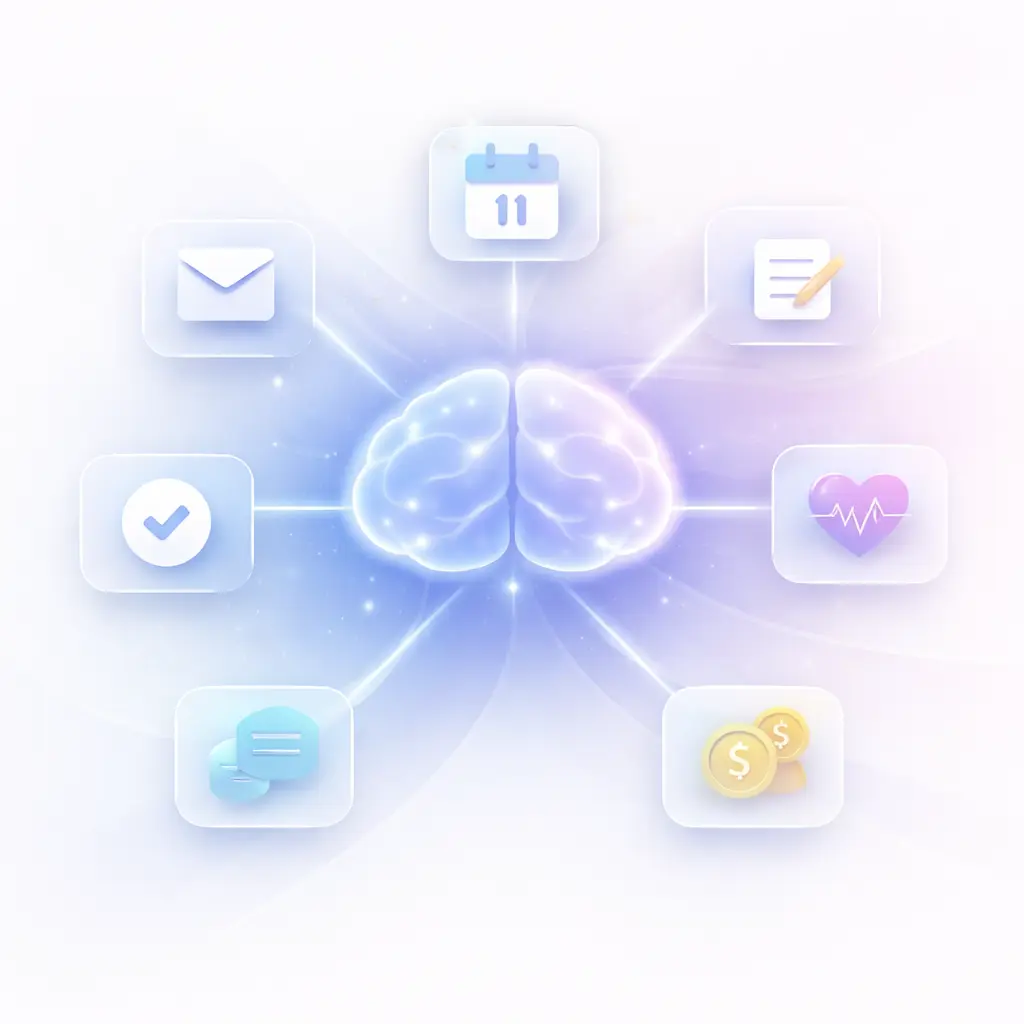
One AI replaces many apps
| Old Way | New AI Way |
|---|---|
| Email app | AI reads + summarizes |
| Calendar | AI auto-schedules |
| Notes app | AI remembers context |
| Health app | AI tracks + advises |
| Finance app | AI alerts + plans |
Real-world implications (no hype)
Positive impact
- Time saving: 1–2 hours daily
- Less stress: No app hopping
- Fewer mistakes: AI remembers everything
- Better focus: You do work, AI manages logistics
Real risks (important)
Let’s be honest.
- 🔐 Privacy concerns (data access)
- 🧠 Over-dependency (thinking kam ho sakta hai)
- ❌ Wrong suggestions if data is incomplete
- 💸 Paid plans can get expensive
AI assistants are powerful.
But blind trust is dangerous.
Comparison with closest alternatives
Popular AI assistants (2026 outlook)
| Feature | ChatGPT | Google Gemini | Microsoft Copilot |
|---|---|---|---|
| Daily planning | ⭐⭐⭐⭐ | ⭐⭐⭐ | ⭐⭐⭐⭐ |
| Email handling | ⭐⭐⭐ | ⭐⭐⭐⭐ | ⭐⭐⭐⭐⭐ |
| Context memory | ⭐⭐⭐⭐ | ⭐⭐⭐ | ⭐⭐⭐ |
| Beginner friendly | ⭐⭐⭐⭐⭐ | ⭐⭐⭐ | ⭐⭐⭐ |
| Ecosystem lock | Low | High | Very High |
Simple explanation:
- ChatGPT: Flexible, neutral, beginner-friendly
- Gemini: Best if you live inside Google apps
- Copilot: Strong for office/work users
No “best for everyone”.
Choice depends on your daily life.
Key facts
- AI assistants use context memory
- Work across apps, not inside one app
- Learn from habits (time, behavior)
- Use automation + decision logic
- Mostly cloud-based (internet needed)
Expert perspective (neutral)
As someone tracking AI adoption for years, one thing is clear:
AI assistants will not replace humans.
But they will replace:
- Manual planning
- Reminder apps
- Repetitive decisions
The winners will be people who:
- Use AI consciously
- Keep control
- Don’t over-automate thinking
AI should support, not dominate.
What this means for the next 3–5 years
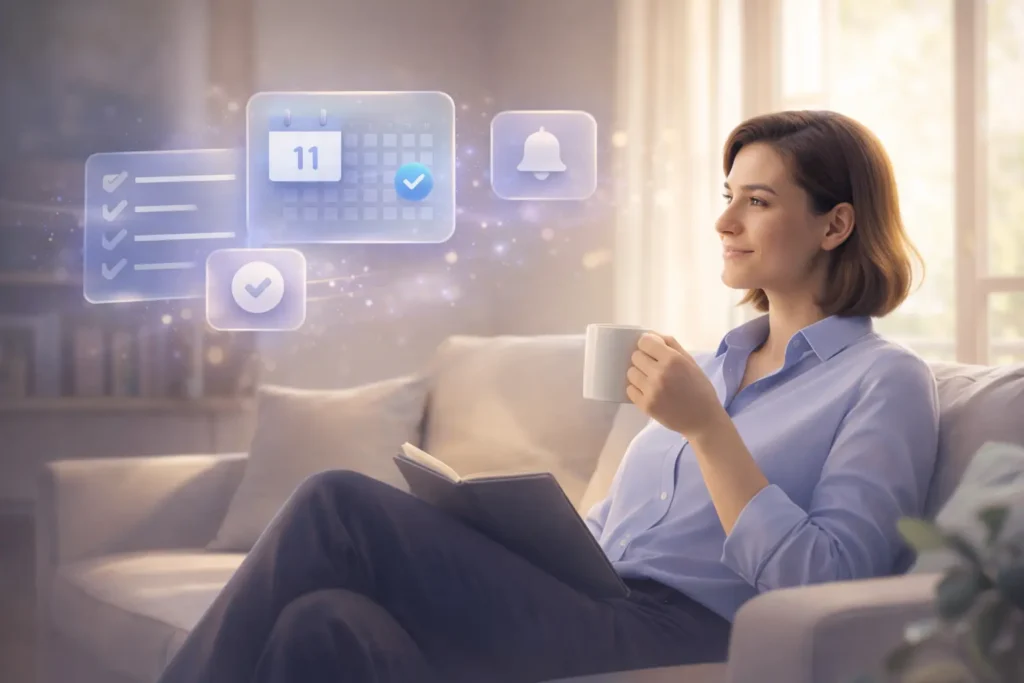
Future trends
- One AI per person (not many tools)
- AI understands emotions & stress
- Voice + text mixed interaction
- Local AI for privacy
- Paid AI assistants like subscriptions
Skills to prepare
- Asking better questions
- Reviewing AI suggestions
- Understanding data privacy
- Decision validation (human final say)
Final takeaway for beginners
Simple truth:
“Future me ka successful version wo hoga jo AI ko helper banaye, boss nahi.”
If you’re starting:
- Don’t chase tools
- Understand use-cases
- Start small
- Stay aware
AI personal assistants are not scary.
They are life organizers.
FAQs
Q1. What is an AI personal assistant in simple words?
An AI that helps manage your daily life—emails, tasks, schedules, and decisions—automatically.
Q2. Is AI personal assistant safe to use?
Mostly yes, but data privacy and permissions must be checked carefully.
Q3. Will AI assistants replace apps?
Yes, many apps will become background services instead of direct usage.
Q4. Do beginners need AI assistants?
Yes. They reduce confusion and simplify daily planning.
Q5. Are AI assistants expensive?
Basic versions are affordable. Advanced features may cost monthly fees.
Q6. Can AI make wrong decisions?
Yes. That’s why human final control is important.
Q7. Which AI assistant is best for beginners?
Flexible assistants like ChatGPT-style tools are easiest to start with.
Q8. Should students use AI personal assistants?
Yes, for time management and reminders—but not for cheating or shortcuts.